
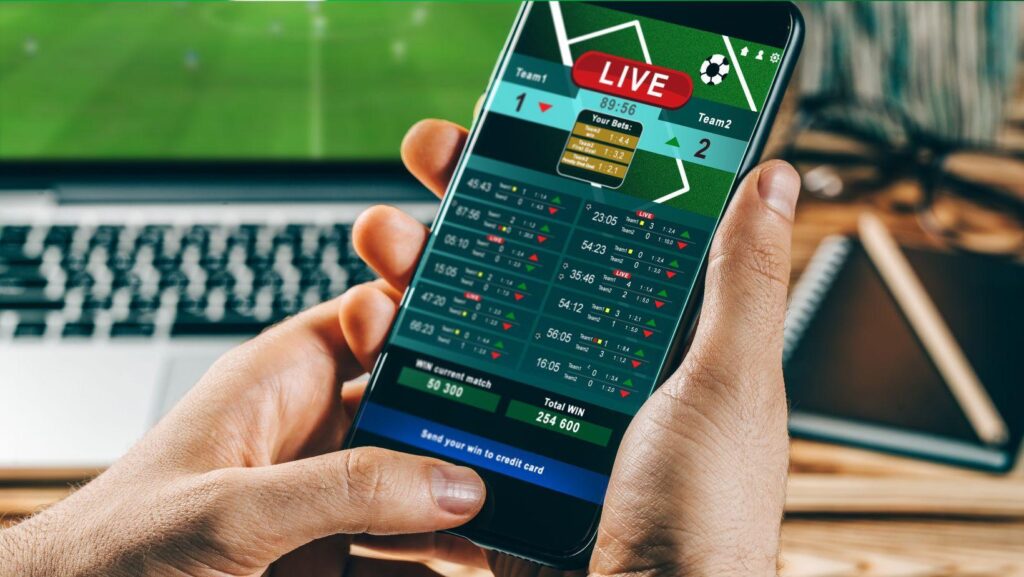
Every sportsbook app you've ever opened already knew where you were standing before you tapped a single button. Not in a creepy way. In a compliance way. Long before a state legalizes anything, the geofencing code is already written, tested, and sitting dormant in the build, waiting for a green light that might not come for years.
Minnesota is the best live example of this right now. Lawmakers have been trying to legalize mobile wagering since 2019. Bills have died in committee, died on the floor, and died in conference negotiations between tribal gaming interests and commercial operators who can't agree on who gets a cut. As of this writing in August 2026, Minnesota remains one of a shrinking handful of states without any legal framework for sports betting, mobile or retail.
That's not just a story about politics. It's a story about product design. Sportsbook engineering teams don't wait for a bill to pass before they start building. They build the verification flow, the location check, the deposit screen, and the self-exclusion tools years in advance, because when a market finally opens, the operator with the app already tested and ready wins the launch week. Anyone who's actually followed minnesota sports betting coverage over the past two legislative sessions has watched this exact pattern play out in slow motion. The bills stall. The apps don't.
The Geofencing Problem Nobody Talks About Until It Breaks
Here's the thing about location verification. It sounds simple. Check GPS, confirm the user is inside state lines, let them place a bet. In practice it's a mess of edge cases: someone standing in a car on I-35 straddling the Wisconsin border, someone using a VPN they forgot to disable, someone in a high-rise where GPS bounces off concrete and reads three blocks off.
Operators that already run in Iowa, Wisconsin, or the Dakotas have spent years hardening this logic against exactly those edge cases. When a new state finally flips the switch, the technical lift is small. The legal lift is the bottleneck. Minnesota's stall means every major operator has had extra years to test geofencing precision in neighboring states before ever needing to deploy it locally.
Kirsten Kukowski, a source quoted in KSTP's recent reporting on the renewed legislative push, pointed to the volume of Minnesotans already betting through offshore or out-of-state accounts as part of the urgency argument. That's not a hypothetical. People in Minneapolis are already tapping through onboarding flows built for Iowa or Michigan, using VPNs or trips across state lines to place bets that would be perfectly legal forty minutes away in Hudson, Wisconsin.
KYC Doesn't Wait for Legalization Either
Know Your Customer verification is the other half of this. Uploading a driver's license photo, matching your name against a Social Security number, confirming you're not on a self-exclusion list in another state. None of that gets built the week a bill passes. It gets built, tested, and refined against millions of transactions in states where the operator already runs live.
I've gone through this flow a dozen times across different states for different apps, and the pattern is consistent. The first upload usually gets flagged for a blurry photo or a mismatched middle name. Mine got stuck for eleven minutes once because my ID had a maiden name that didn't match a utility bill. That friction isn't a bug. It's the system doing exactly what regulators demand of it, and it's the same system that will greet the first Minnesota user the day mobile betting finally goes live, whenever that turns out to be.
A 2026 bill introduced by Minnesota legislators would let tribal nations operate mobile wagering directly, according to CBS Sports, which would be a meaningfully different app ecosystem than the commercial-operator model used in states like New Jersey or Michigan. Tribal-operated platforms often integrate with existing casino loyalty systems, which changes the KYC pipeline entirely. Instead of building from zero, they're extending player databases that already exist.
Meanwhile, a separate bill would ban most betting on prediction markets in the state, CBS News Minnesota reported this year. Two competing regulatory instincts, one legislature, zero resolution. That's Minnesota in a sentence.
What This Means for Your Own App Setup, Regardless of State
Most readers of this site aren't in Minnesota. Doesn't matter. The lesson generalizes. Whatever app you're using right now already went through this exact gauntlet in whatever state legalized it first, and the leftover design choices are baked into the interface you use today.
Deposit limits that feel oddly specific? Usually inherited from the strictest state the operator serves. Weekly caps, mandatory cool-off prompts, the "are you sure" modal before a big parlay. None of it is arbitrary. It's compliance debt carried forward from wherever the app launched first, often years before your state came online.
Roughly 97% of Americans now own a smartphone, per Pew Research Center, and that mobile-first reality is exactly why operators front-load so much engineering into onboarding before a single state approves them. The app has to work flawlessly on day one because there is no slow ramp. Launch day in a new legal market is a stampede, not a trickle.
Crypto rails are becoming part of that same pre-launch groundwork too. The Fintech Times reported on operators overhauling cashier flows to support faster settlement, and states like Minnesota that keep stalling give those payment teams more runway to get stablecoin withdrawals right before regulators start asking pointed questions about it.
None of this is glamorous. But if you've ever wondered why your sportsbook app asks for a selfie holding your ID, or why it silently blocks you the second you cross into a neighboring state, this is why. The interface got hardened somewhere else, on somebody else's clock, before your state ever got a vote.
Same Arms Race, Different Battlefield
Our earlier look at gaming app UX covered how the smoothest onboarding flows in 2026 increasingly borrow from crypto exchange design rather than legacy sportsbook templates. Minnesota's limbo is the regulatory mirror of that same trend. The fastest, cleanest apps aren't the ones built in a hurry after legalization. They're the ones that spent years getting hardened in other markets first.
If bankroll discipline matters to you as much as the interface does, it's worth pairing this with a practical read on staying within a fixed betting budget, since a slick app with a bad limit-setting habit behind it is still a bad combination no matter how fast the withdrawal clears.
Frequently Asked Questions
Is sports betting legal in Minnesota in 2026? No. As of August 2026, Minnesota has no legal framework for retail or mobile sports betting. Multiple bills have been introduced since 2019, including a 2026 proposal letting tribal nations run mobile wagering, but none have passed both chambers.
Why do betting apps build features before a state legalizes anything? Operators want to launch fast once a market opens, since early market share is hard to claw back later. Geofencing, KYC verification, and deposit-limit tools get built and refined in already-legal states, then extended once a new state passes legislation.
What is geofencing and why does it matter for bettors? Geofencing uses GPS and network data to confirm a user is physically inside a state where betting is legal. It matters because it's the mechanism that blocks or allows every bet you try to place, and it's often imperfect near state borders or in dense urban buildings.
Will tribal casinos control mobile betting in Minnesota if it passes? A 2026 bill would allow Minnesota tribal nations to operate mobile wagering directly, a different model than the commercial-operator approach used in states like New Jersey. Whether this passes remains uncertain given years of stalled negotiations.
How does KYC verification affect my first bet on a new app? KYC requires uploading a government ID and confirming personal details against public records before you can withdraw funds. It's common for a first upload to get flagged over blurry photos or name mismatches, which can delay your first cashout by minutes or, in rarer cases, days.
The Takeaway for Anyone Watching From Outside Minnesota
Minnesota's legislature will probably try again next session, and the session after that, the way it has since 2019. That's frustrating if you live there. But the app ecosystem waiting on the other side of eventual legalization isn't starting from scratch. It's been quietly built, stress-tested, and refined in every neighboring market for years.
Gambling involves risk. Please play responsibly and only wager what you can afford to lose. If you feel gambling is becoming a problem, visit BeGambleAware.org or call 1-800-GAMBLER.
Whatever state you're betting from today, the app in your hand carries the compliance scars of somewhere else's launch day. Minnesota is just the clearest, longest-running example of that process happening in real time.