
June 2026 was supposed to feel big. Summer Game Fest delivered. 3.86 million concurrent viewers, according to StreamsCharts data cited by Tech Insider, which is a record by a significant margin. Resident Evil Code Veronica remake, Final Fantasy 7 Revelation, Persona 6. The announcement energy was real. But announcements aren’t releases, and the actual June release calendar landed thin. PC Gamer flagged it early in the month: Destiny 2 updates and the newly shipped Marathon are doing most of the heavy lifting, while the rest of the slate feels sparse compared to what the Summer Game Fest hype implied.
That gap between announcement excitement and actual release availability is nothing new. Publishers have been clustering releases around the same seasonal windows for years, burning players out in October and leaving them with almost nothing in June. Newzoo’s analysts told PC Gamer the fixation on the holiday window is actively hurting publishers through what they call ‘avoidable cannibalization’. Too many big releases competing in the same few weeks, while other months go dark. That structural pattern is what creates dead time. And dead time is where things get interesting.
What Gamers Actually Do When There’s Nothing to Play
The conventional assumption is that gamers just wait. Maybe they replay something from the backlog. Maybe they finally finish that FromSoftware title they bounced off in February. That’s partly true. But the data on digital media consumption suggests something more fragmented. Deloitte’s Digital Media Monitor Dashboard tracks how audiences shift across gaming, streaming, and social platforms during periods of low new-content availability. And the pattern isn’t passive waiting. It’s platform-hopping.
Platform-hopping during release gaps is worth paying attention to, because it exposes which products are actually built for retention versus which ones are built for launch spikes. A game that ships with a compelling live-service loop holds players through the dry months. A game that doesn’t. Even a genuinely good single-player experience. Loses them to whatever grabs attention next.
The platforms competing for that idle attention fall into a few obvious buckets: streaming services (still the default fallback for most people), mobile games, YouTube and Twitch content, and browser-based entertainment platforms that have proliferated quietly over the last three years.
The Lowest-Friction Alternative: Browser Entertainment and What It Reveals
Browser-based platforms are worth singling out here because their economics work differently from traditional games. There’s no install, no $70 upfront, no download queue. The barrier to entry is intentionally as close to zero as possible, which is exactly why they’re designed to capture players during gap periods when commitment levels are low.
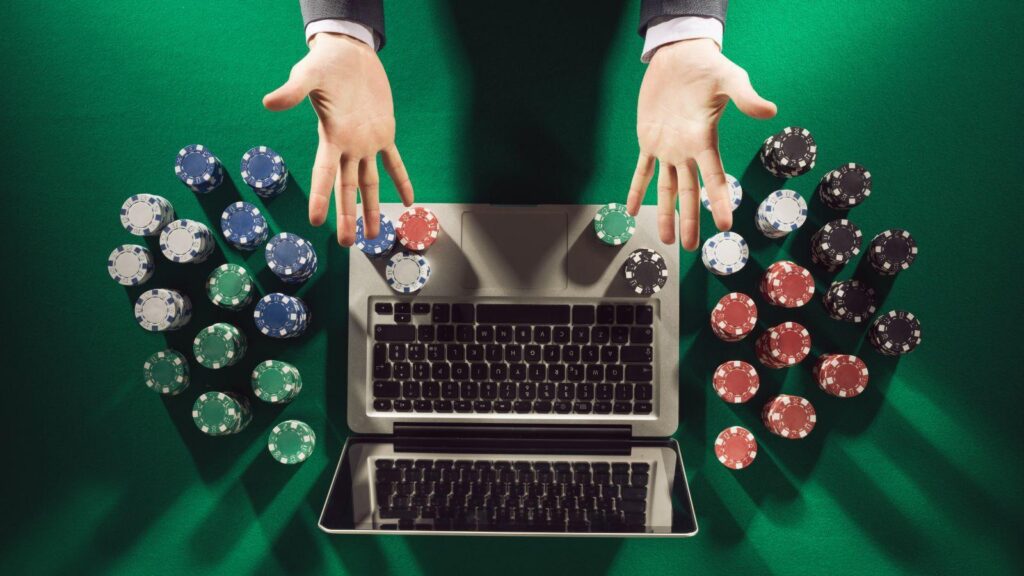
Online casino platforms are one category in this space, and their bonus structure is a telling case study in low-friction acquisition. The best no deposit bonuses. Ranked and reviewed by Vegas Aces analyst Alex Martin across 15 platforms, tracking actual wagering requirements, cashout caps, and game restrictions. Are specifically engineered to get a curious player inside the product without asking for financial commitment upfront. It’s the same logic as a free beta or a game demo: reduce the cost of trying to zero and see who sticks around. That’s not a compliment to the marketing; it’s an observation about the mechanics. The platforms that do this well convert idle curiosity into genuine engagement.
Gambling involves risk. Play responsibly and only wager what you can afford to lose. If gambling is affecting you, visit BeGambleAware.org.
Mobile games use an identical playbook. Free to download, monetize through time pressure and cosmetics. Streaming services invert it: they ask for a subscription upfront but reduce the marginal cost of any individual show to zero once you’re in. Each model is calibrated to a different player psychology, and release-gap periods are when you can actually observe which calibration works.
Marathon and Destiny 2 Are Holding the Line, But Barely
Back to June specifically. Marathon launched with genuine ambition and a polarizing reception. It’s doing something. The extraction shooter format has a dedicated audience, and Bungie’s production values are hard to argue with. But it’s a demanding game. High skill floor, steep onboarding, the kind of thing that rewards commitment rather than casual dipping.
Destiny 2’s seasonal content is the opposite: designed for players who log in for 45 minutes, make measurable progress, and leave satisfied. That model has kept Destiny 2 relevant for years in ways that most live-service competitors haven’t managed. It’s not accidental. The seasonal loop is precision-engineered to make dead time feel productive.
Kotaku’s analysis of the fall 2026 release calendar. Framing the whole situation as publishers running scared from GTA 6, creating a giant mess of clustered releases in September while leaving other months threadbare. Explains a lot of what we’re seeing in June. The publishers who aren’t GTA 6 are treating summer as dead time by default, handing it off to Bungie and whoever else is willing to hold the fort.
Why Dead Time Is the Real Retention Test
Here’s the uncomfortable truth: a game’s ability to hold players during release droughts is a better measure of its long-term health than its launch numbers.
Launch numbers are partly a marketing function. A big IP, a well-placed trailer at Summer Game Fest, word-of-mouth from an influencer with 4 million subscribers. These drive opening week numbers without telling you much about whether the underlying product is sticky. Dead months tell you more. If your player base is still logging in during a slow June with nothing competing for their attention, you’ve built something worth keeping. If they’ve migrated to streaming or browser entertainment or mobile, you probably launched a product that was good for a week.
The publisher site has covered this dynamic before. The review of best no deposit bonuses piece from a couple of weeks ago made the same point about bonus structures specifically: the headline offer isn’t where the product quality lives. The wagering requirements, the cashout limits, the eligible games list. That’s where you find out whether the platform actually wants to retain you or just acquire you.
Same logic, different vertical. Any digital entertainment product. Game, platform, service. That looks great at acquisition and falls apart during low-stakes retention windows isn’t really built for users. It’s built for launch metrics.
What June 2026 Is Actually Good For
Plenty, honestly. A thin release calendar isn’t a disaster. It’s breathing room.
For players who’ve been meaning to go deeper on Elden Ring’s DLC, or finally run a Baldur’s Gate 3 honour mode playthrough, or catch up on the backlog of indie releases that got buried under the October pile-up. June is the window. No new release is demanding attention. Nothing is generating FOMO loud enough to override existing plans.
For platform developers and live-service teams, a slow month is a pressure test. The players who stay are the ones who actually like what you’ve built, not the ones who showed up because everyone was talking about the launch. That’s useful data.
And for anyone watching the broader digital entertainment market, a gap period like this reveals the ecosystem as it actually functions rather than as it presents itself during the hype cycle. Which platforms are built to hold attention without a major release propping them up? Which are built to ride launch momentum and quietly lose the audience afterwards?
June 2026 has the answer. It’s not a particularly dramatic one. But it’s honest.
FAQ
- Why is the June 2026 game release calendar so sparse? Publishers have historically clustered major releases around the holiday window, leaving mid-year months thin by comparison. Analysts at Newzoo describe this as avoidable cannibalization. Too many big games competing in Q4 while months like June get overlooked. The GTA 6 factor in fall 2026 has made this pattern even more pronounced this year.
- Is Marathon worth playing during the June 2026 release gap? Depends on your playstyle. Marathon has a high skill floor and rewards committed players, but it’s not a casual drop-in experience. If you want something to fill 30-45 minutes between other things, Destiny 2’s seasonal content is probably the better fit right now.
- What should I play while waiting for bigger 2026 releases? Backlog completion is the obvious answer, but it’s genuinely good advice. Games like Baldur’s Gate 3 and Elden Ring’s Shadow of the Erdtree DLC have enough content to fill months comfortably. Browser-based platforms and mobile titles also see increased engagement during release gaps for players who want something lighter.
- Does Summer Game Fest translate into actual June releases? Rarely at the same scale as the announcement energy suggests. Summer Game Fest is primarily a showcase event. It generates hype for titles that release months later. The 2026 edition broke viewership records but most of its announced titles won’t ship until late 2026 or 2027.
- How do live-service games handle slow release months? The best ones. Destiny 2 is the clearest example. Use seasonal content drops timed to fill calendar gaps deliberately. Weekly challenges, rotating loot pools, and limited-time events create reasons to log in even when nothing new is competing for attention. That loop is what separates sustainable live-service games from ones that spike at launch and fade.