
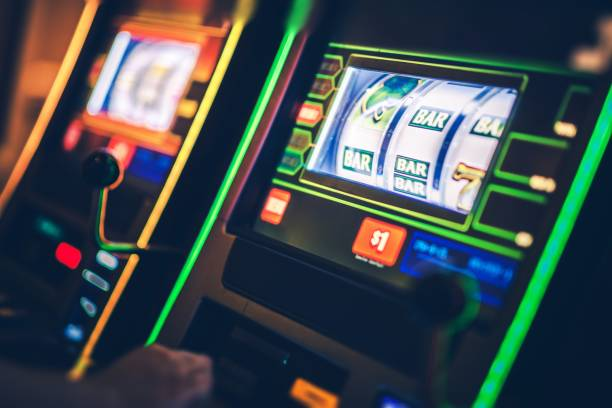
Modern slot games may still revolve around reels, symbols, and familiar visual mechanics, but the technology behind them has become increasingly intelligent. Developers now rely on advanced software, automated testing, data analysis, responsive interfaces, and artificial intelligence-assisted tools to build games that are smoother, more adaptable, and easier to manage across different devices.
This does not mean that technology is replacing the basic structure of slot gaming. Instead, smarter systems are improving how games are designed, tested, presented, and delivered.
Smart Software Coordinates Complex Game Features
A modern slot game is controlled by software that manages far more than reel movement.
Game engines coordinate symbols, transitions, animations, sound effects, user inputs, and feature sequences. When several events occur at once, the system processes them in a carefully defined order.
For example, a single sequence may involve symbols disappearing, new symbols entering the screen, an animation starting, a sound effect playing, and the interface updating. The software must coordinate all of these actions almost instantly.
This level of automation allows developers to create more complex game structures while keeping the experience visually clear.
RNG Technology Handles the Mathematics
One important distinction in modern slot technology concerns the role of artificial intelligence and random number generators.
Digital slots commonly use random number generators, or RNGs, to determine outcomes. An RNG continuously produces numerical values that are processed according to the mathematical rules programmed into the game.
Artificial intelligence does not need to determine individual spin results.
Instead, AI-based tools may be used elsewhere in the development process, such as software testing, design evaluation, performance monitoring, or asset production.
Keeping these functions separate helps distinguish the mathematical core of a slot from the technologies used to build and maintain it.
AI Can Support Game Development
Artificial intelligence is becoming useful in many areas of digital production, and slot development is no exception.
Development teams can use AI-assisted tools to identify coding issues, test interface variations, organize design assets, or analyze large amounts of performance data.
For example, automated systems can repeatedly test menus, buttons, animations, and transitions across different screen sizes. This can help developers identify situations where text becomes unreadable, controls overlap, or animations fail to display correctly.
AI can also support creative workflows by helping teams generate early design concepts or organize visual references. Human designers still decide which ideas fit the intended theme and technical requirements.
Automated Testing Improves Reliability
Testing modern slots manually can be time-consuming because games often contain many possible states.
A game may behave differently depending on the device, screen orientation, browser, operating system, or sequence of activated features.
Automated testing tools can run large numbers of technical checks without requiring a person to repeat every action manually.
These systems can examine whether buttons respond correctly, animations finish as expected, assets load properly, and transitions occur in the correct order.
Developers can then concentrate on unusual problems that require human judgment.
Data Helps Developers Understand Performance
Modern game development also benefits from performance data.
Technical analytics can show how quickly a game loads, which devices experience rendering problems, or where interface errors occur most frequently.
This information allows developers to make targeted improvements.
If a particular animation causes slower performance on certain devices, it can be optimized. If a menu is difficult to use on smaller screens, its layout can be adjusted.
Data in this context functions as a development tool rather than simply a record of activity. It helps teams understand how software behaves under real-world conditions.
Responsive Interfaces Adapt to Different Devices
Smart design also means creating interfaces that can respond to their environment.
Modern สล็อตเว็บตรง slots may be accessed from phones, tablets, laptops, or larger displays. Responsive technology automatically adjusts the interface according to screen size and orientation.
Reels can resize, controls may move, and menus can become more compact.
Some systems can also select appropriate visual assets depending on device capabilities. A powerful device may display more detailed effects, while a lower-powered device may use optimized resources to maintain smoother performance.
This approach helps one game operate consistently across a much wider range of hardware.
Cloud Systems Make Games Easier to Deliver
Cloud infrastructure provides another layer of intelligence behind modern SAWA888 slots.
Graphics, sound files, animations, and software resources can be distributed through remote servers and content delivery networks. Caching and progressive loading help reduce unnecessary delays.
Developers can also monitor technical performance across different regions and devices, making it easier to identify problems after a game has been deployed.
Cloud technology therefore supports both delivery and ongoing maintenance.
Smarter Technology Behind Familiar Reels
The growing intelligence of slot technology is happening largely behind the scenes.
Players may still see familiar reels and symbols, but developers are increasingly supported by AI-assisted tools, automated testing, performance analytics, responsive software, and cloud infrastructure.
These technologies make slot development more efficient while allowing games to become visually richer and technically more complex. The reel remains the recognizable centerpiece, but the systems surrounding it are becoming considerably smarter.